Montpellier modern computer screen displaying project management software Montpellier

SharePoint for Non-Tech Teams: Simplifying Data Sharing and Communication

At its core, Microsoft SharePoint is a web-based collaboration platform designed to make teamwork and data management easier. It enables organisations to create sites for file sharing, document management, and team collaboration. SharePoint integrates smoothly with other Microsoft Office applications, such as Outlook, Teams, and OneDrive, making it an essential part of the modern digital workspace.

Solving Inventory Headaches with Insight Works

One of the most common—and most frustrating—issues businesses face with inventory is inaccurate stock levels. These discrepancies can lead to stockouts, overstocking, and ultimately missed sales opportunities. In fact, 43% of businesses report that inventory inaccuracy is a significant challenge for them (Source: National Association of Wholesaler-Distributors), and 77% of businesses that manage inventory manually are prone to mistakes (Source: Supply Chain 24/7).

A laptop displaying a data dashboard with various charts and metrics, surrounded by graphic representations of data blocks.

What is Copilot in Power BI? Unlocking the Potential of Data Analytics

Managing and unifying disparate data sources can be a daunting task. Microsoft Fabric alleviates these challenges by providing a seamless connection to various data sources, enabling efficient data analysis without the need for extensive resources. With Fabric, users can easily consolidate their data within Power BI, leveraging AI and SaaS technologies for a more efficient workflow.

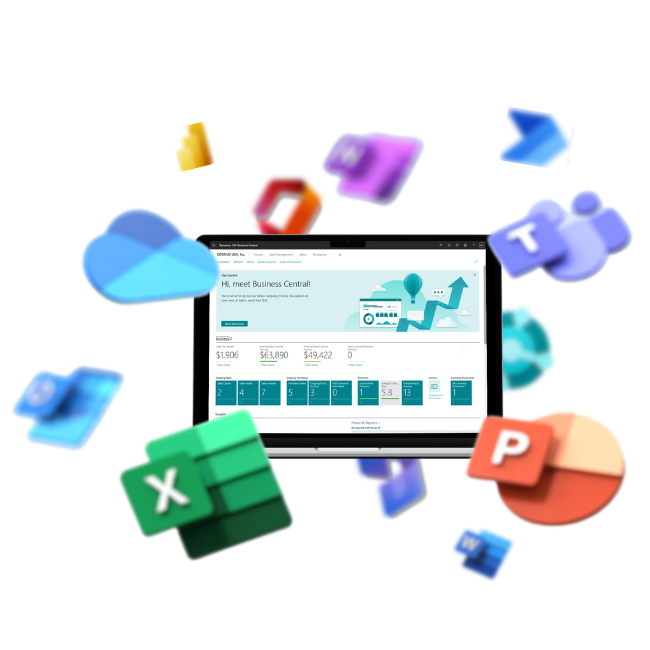
A computer screen displays a business management dashboard. Surrounding the screen are floating icons of various Microsoft Office applications, including Excel, Word, PowerPoint, and Teams, symbolizing the integration of these tools with accounting software like Sage and other business solutions in the North East.

AI in ERP Systems are Transforming Business Intelligence

Businesses are increasingly recognising the transformative power of AI-driven ERP solutions. These platforms not only help organisations leverage data for informed decision-making but also elevate productivity and foster a competitive edge. According to a report by Markets and Markets, the global AI in the ERP market is projected to skyrocket from $1.1 billion in 2021 to an astounding $10.1 billion by 2026.

Top 5 Challenges SMBs Face in Field Service and How Dynamics 365 Solves Them

Adopting a unified platform like Dynamics 365 improves decision-making speed by up to 40% (Source: https://www.microsoft.com/en-us/dynamics-365), allowing businesses to respond quickly to customer demands and market shifts. Additionally, streamlined data processes reduce administrative overhead, enabling SMBs to allocate more resources toward growth-oriented initiatives. Organisations with centralised systems also experience a 15% improvement in operational efficiency, paving the way for sustainable business growth.

Montpellier SwiftCloud service logo on blue Montpellier

Streamlining Order Approval: How SwiftCloud’s PO Authorisation Module Enhances Efficiency

Delays in Approvals: Multiple stakeholders may need to review and authorise orders, leading to bottlenecks that can delay fulfilment.

Lack of Visibility: Without a clear overview of the status of each order, it can be challenging to manage customer expectations and respond to inquiries promptly.

Error-Prone Manual Processes: Manual order approval processes are often susceptible to human error, resulting in inaccuracies that can impact customer satisfaction and trust.

These challenges highlight the need for an effective solution that can streamline order approvals while maintaining accuracy and efficiency.

Enhancing Customer Experience with CRM and AI in Business Central

The combination of CRM and AI also revolutionises customer service. With AI-powered chatbots and virtual assistants integrated into Business Central, businesses can provide round-the-clock support to customers. These tools can handle frequently asked questions, troubleshoot common issues, and guide users through processes, freeing up human agents to focus on more complex inquiries.