Myth Busting Microsoft Dynamics 365 Business Central
For many businesses, spreadsheets and legacy accounting software have been part of daily operations for years. Microsoft Excel still plays a role in finance teams across the UK, but as businesses grow, disconnected systems and manual reporting processes often begin to create limitations. This is where Business Central comes in.
Modern ERP platforms are designed to solve these challenges by bringing finance, operations, reporting and customer management into one connected environment.
One of the most widely adopted solutions for growing SMEs is Microsoft Dynamics 365 Business Central, Microsoft’s cloud-based ERP platform designed to help businesses improve visibility, automate processes and scale more effectively.
Business Central is the successor to Microsoft Dynamics NAV and forms part of the wider Microsoft Dynamics 365 ecosystem, alongside applications for CRM, sales, customer service and operations.
Despite its growing popularity, there are still several misconceptions about ERP software and Microsoft Business Central. Below, we break down some of the most common myths and explain how modern ERP systems actually work for SMEs.
What is Microsoft Dynamics 365 Business Central?
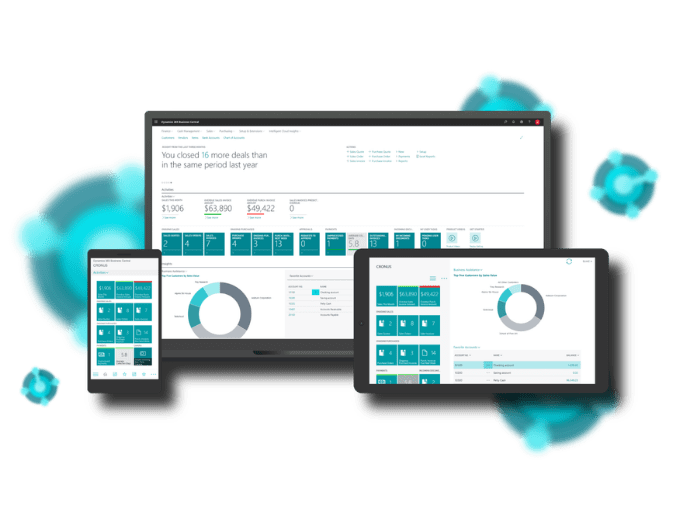
Microsoft Dynamics 365 Business Central is a cloud ERP system that connects finance, purchasing, stock control, reporting, operations and customer management within one platform.
Unlike traditional accounting software, Business Central is designed to provide visibility across the entire organisation, helping businesses make faster and more informed decisions.
Learn more about ERP solutions
https://monpellier.co.uk/services/erp-solutions/
Myth 1. “ERP systems from Microsoft are too expensive”
One of the biggest misconceptions surrounding ERP software is that it is only suitable for large enterprises with significant budgets.
In reality, Microsoft Dynamics 365 Business Central is designed specifically to support growing businesses that need more functionality than basic accounting software can provide.
Because it is cloud-based, businesses avoid many of the upfront infrastructure costs associated with traditional on-premise ERP systems, including:
- Physical servers
- Hardware maintenance
- Complex upgrades
- Large upfront software investments
The modular structure of Business Central also means businesses only pay for the functionality and users they require, making it scalable as the organisation grows.
For many SMEs, the cost of disconnected systems, duplicated data entry and manual reporting can quickly outweigh the investment in a unified ERP platform.
Myth 2. “We will still need spreadsheets and manual reporting”
Many businesses assume that ERP software still requires substantial manual work outside the system.
Modern ERP platforms are designed to reduce reliance on spreadsheets by centralising reporting and live business data in one environment.
Microsoft Dynamics 365 Business Central integrates directly with tools such as Microsoft Power BI, allowing businesses to create real-time dashboards and reporting views across finance, operations and sales.
This allows organisations to:
- Monitor financial performance in real time
- Improve forecasting accuracy
- Reduce manual reporting processes
- Access live operational insights
- Create custom dashboards for different departments
Businesses can still export data into Excel when required, but the reliance on disconnected spreadsheets is significantly reduced.
Myth 3. “The software will be difficult to learn”
One of the reasons businesses adopt Microsoft Business Central is because it integrates with familiar Microsoft applications such as Outlook, Excel and Teams.
This creates a more intuitive user experience for employees already working within Microsoft 365.
Because Business Central is cloud-based, deployment is also much faster than traditional ERP systems, allowing businesses to get up and running more efficiently.
Additional benefits include:
- Familiar Microsoft-style interface
- Remote access from any location
- Simplified software updates
- Reduced IT complexity
- Faster onboarding for staff
With the right implementation and training support, many SMEs transition to Business Central more smoothly than expected.
Myth 4. “ERP software will not integrate with our existing systems”
Integration is one of the biggest strengths of the Microsoft ecosystem.
Microsoft Dynamics 365 Business Central integrates directly with Microsoft Outlook, allowing users to create quotes, invoices and purchase orders without leaving their inbox.
The platform can also integrate with:
- CRM systems
- Payroll software
- Reporting tools
- Warehouse and stock systems
- Microsoft Teams and SharePoint
- Third-party business applications
Explore CRM software solutions
https://monpellier.co.uk/services/customer-relationship-management-crm-software/
For growing businesses, this reduces duplication, improves data accuracy and creates a more connected operational environment.
Myth 5. “Business Central is just another accounting package”
While Business Central includes strong financial management functionality, it is far more than a traditional accounting package.
It is a full ERP platform designed to support multiple areas of the business, including:
- Finance and reporting
- Stock and supply chain management
- Purchasing and operations
- Sales and customer management
- Project tracking and business intelligence
Because it operates within the wider Microsoft ecosystem, businesses can also extend functionality using:
- Microsoft Power BI
- Power Automate
- Power Apps
- Microsoft Teams
- SharePoint
This allows businesses to automate workflows, improve reporting and connect systems across departments.
Why businesses are moving towards cloud ERP systems
More UK SMEs are replacing legacy accounting systems with cloud ERP platforms because they need:
- Better financial visibility
- Faster reporting
- Reduced manual processes
- Improved scalability
- Greater flexibility for remote working
- Connected systems across departments
Cloud ERP systems such as Microsoft Dynamics 365 Business Central help businesses move away from disconnected software and towards a more modern operational model.
How Monpellier supports Business Central implementations
At Monpellier, we help businesses implement and support Microsoft Dynamics 365 Business Central as part of a wider ERP and digital transformation strategy.
Our team combines technical expertise with financial and operational understanding to help organisations modernise their systems and improve visibility across the business.
Our services include:
- ERP consultancy and implementation
- Microsoft Dynamics 365 Business Central support
- Cloud migration and system modernisation
- Integration with CRM and reporting tools
- Ongoing optimisation and user support
Explore all business software services
https://monpellier.co.uk/services/
Frequently asked questions about Microsoft Dynamics 365 Business Central
What is Microsoft Dynamics 365 Business Central?
Microsoft Dynamics 365 Business Central is a cloud ERP system that helps businesses manage finance, operations, stock, purchasing and reporting within one connected platform.
Is Business Central suitable for SMEs?
Yes. Business Central is designed for growing businesses that need more visibility and functionality than traditional accounting software can provide.
Can Business Central integrate with Microsoft 365?
Yes. Business Central integrates directly with Outlook, Excel, Teams and other Microsoft applications.
Does Business Central replace accounting software?
Yes. Business Central includes accounting and financial management functionality while also providing wider ERP capabilities such as stock control, operations and reporting.
Is Microsoft Dynamics 365 Business Central cloud-based?
Yes. Business Central is hosted on Microsoft Azure and accessed securely through the cloud.
Can Business Central improve reporting?
Yes. Businesses can create real-time dashboards and reports using tools such as Microsoft Power BI and integrated business intelligence features.
How long does a Business Central implementation take?
Implementation timelines vary depending on business size, complexity and migration requirements. Smaller projects can often be delivered much faster than traditional ERP deployments.
Speak to Monpellier
If your business is outgrowing spreadsheets or disconnected accounting systems, Monpellier can help you explore whether Microsoft Dynamics 365 Business Central is the right fit for your organisation.
Request a consultation
https://monpellier.co.uk/contact/
Explore ERP solutions
https://monpellier.co.uk/services/erp-solutions/
Speak to a Business Central specialist
info@monpellier.co.uk
01228 550 167